Vocabulary in context: working out unfamiliar words in 11+ comprehension
The short answer
Read the whole sentence, plus the sentences either side. Cover the tricky word and think of a word that would make sense in its place. Check whether that meaning fits the tone of the passage. Then read your meaning back into the sentence to make sure it still makes sense.
Why "in context" matters
Comprehension questions usually ask what a word means as it is used in the passage. Many words have more than one meaning, and only the surrounding sentence tells you which one is intended. A child who has memorised a list of definitions can still lose the mark by giving a meaning that doesn't fit.
A four-step method
- Find the word and read the full sentence, plus the one before and after.
- Cover the word and ask: "What word would make sense here?"
- Check the tone. Is the passage gloomy, cheerful, tense? A word in a gloomy description is unlikely to have a cheerful meaning.
- Substitute. Read your meaning back into the sentence. If it still makes sense, you've probably got it.
An example
Take this sentence: After the fire, the family was destitute: they had no home, no money and nothing but the clothes they stood up in.
Even if your child has never seen the word, the explanation after the colon is a strong clue that destitute means extremely poor, with nothing at all.
Clues to look for
- Word parts: prefixes such as "un-", "im-" and "sub-" ("submerged" means under the water).
- Explanations nearby: writers often explain a word in the next few words.
- Contrasts: words like "but" and "although" signal an opposite meaning.
- What a character does: a "tetchy" character who shouts and loses their temper is probably easily angered.
Building vocabulary over time
Wide reading is the most reliable way to meet new words. When your child finds one, ask them to guess its meaning from the sentence first and only then check a dictionary. That is exactly how the vocabulary task in each 11+ Texts study pack works: five bold words from the story, a guess from context, then a dictionary check. The answer guide gives a clear definition for each word.
Questions and answers
Should my child learn word lists for the 11+?
Word lists can help, but meeting words in real sentences makes them easier to remember and to use correctly. Combine both if you can.
What if my child doesn't recognise any part of the word?
Use the sentence. Covering the word and thinking of a replacement that makes sense usually gets close to the meaning, even for completely new words.
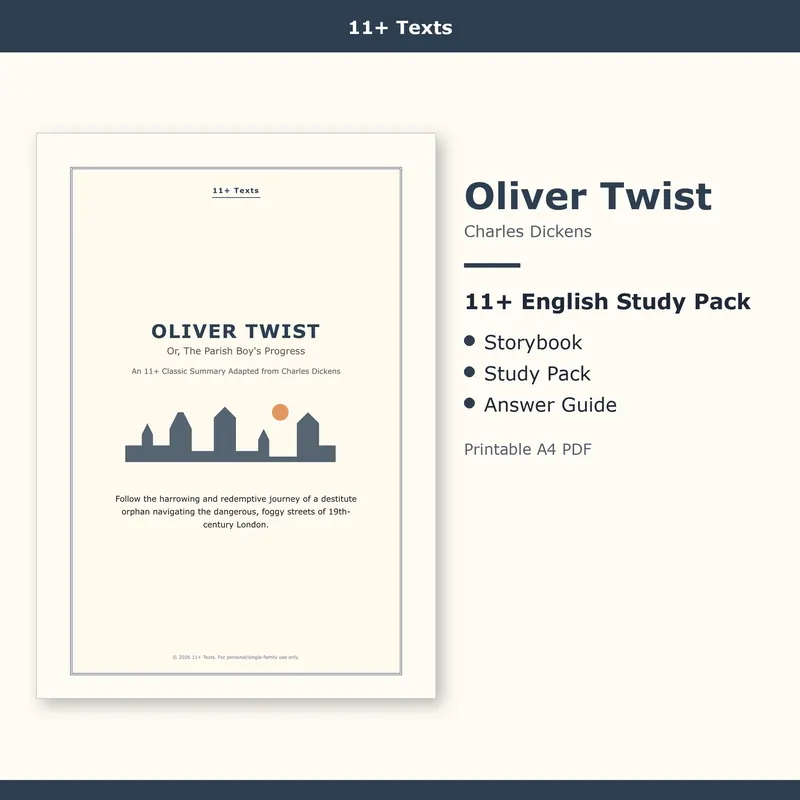
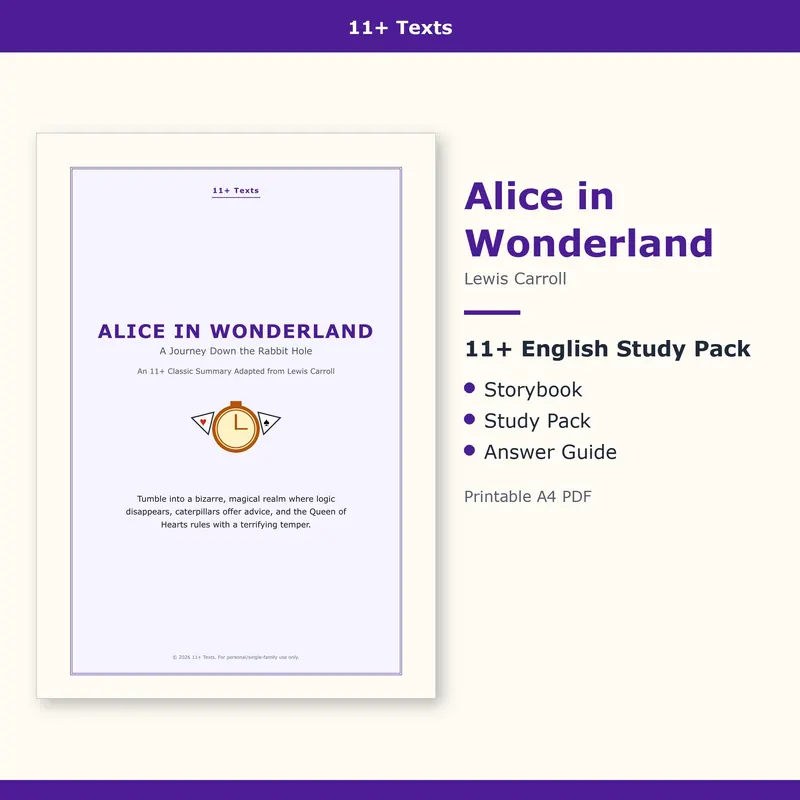
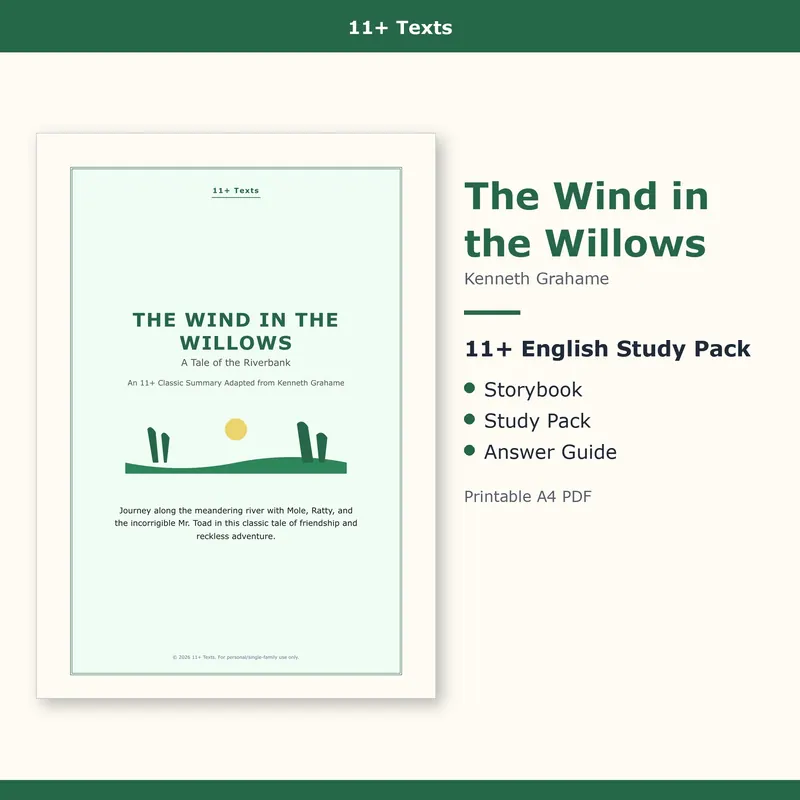
Practise with a classic story
More guides
- 11+ inference questions: how to read between the lines
- Similes, metaphors and personification for 11+ English
- How to answer 1, 2, 3 and 4-mark 11+ comprehension questions
- 10 common 11+ comprehension mistakes, and how to fix them
- 11+ English glossary: literary and grammar terms explained
- How to prepare for 11+ English comprehension at home